Brittany Ippolito
January 7, 2026
Know what your dog's stool is telling you.
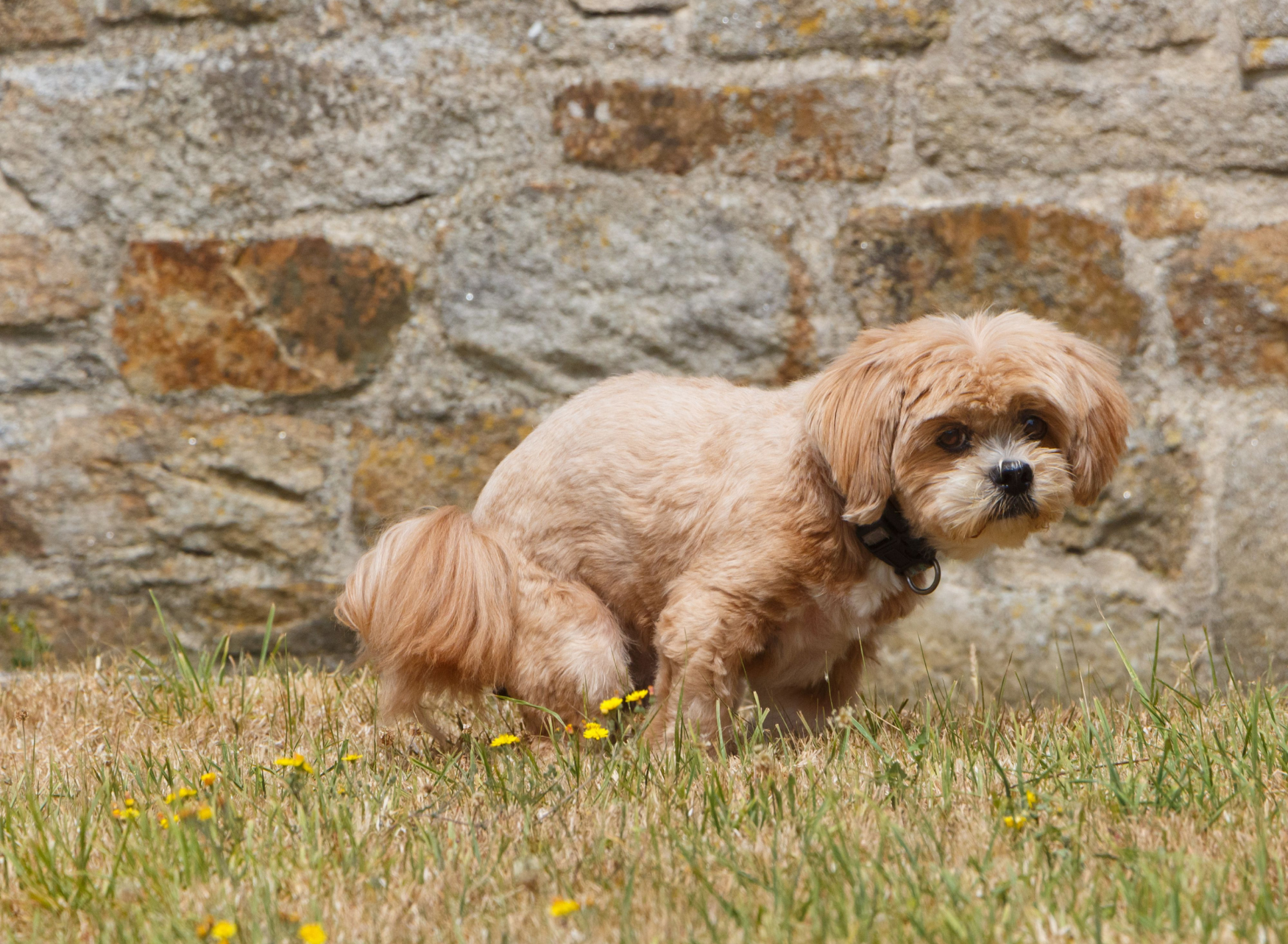
Some people pick it up. Others do not. Some have tried but the smears left behind in the grass don’t lie about the pile of diarrhea that was once there.. and bless the owner who attempted to pick it up.
Some of the comments I often hear dog parents say are:
“Let’s see if business is going to happen today!”
“Occasional diarrhea is normal for him.”
“Yellow stool just means they’re eating white meat.”
“My dog’s poop is nice and small like marbles.”
The color, size, shape, firmness and regularity of your dog’s stool tells a lot about the state of their health beyond just their colon. Your dog should be eliminating every single day. Diarrhea, while common, is not normal. Yellow stool shouldn’t occur, regardless of the type of meat your dog is eating, and can we stop glorifying abnormally small poops?
This article is not meant to call anyone out for how they perceive their dog’s stool habits, but to be used as a tool to help you recognize when your dog’s body is trying to communicate with you and steps you can take to help nudge their system back on course.
In order to understand HOW to fix your dog’s stool issues, it’s important to understand WHY your dog poops to begin with.
Think of your dog’s body as a mini sorting factory. When your dog eats, food moves through their digestive tract where proteins, fats, vitamins, minerals and water are extracted and used as nutrients to fuel their body. What remains from that process contains materials like undigested fiber, old gut bacteria, bile pigments and cellular debris that their bodies do not need and is excreted through their bowels as a substance we identify as poop.
Inside your dog’s gut, resides their microbiome, and it is always shifting, shedding and renewing itself. The microbes that live inside the gut help break down food and produce beneficial substances like short chain fatty acids that help maintain gut integrity. As these microbes die off or get replaced, their remains are eliminated through stool. The lining of the intestines also constantly regenerates and makes up a large portion of stool as well.
Pooping is also a process that is essential for maintaining metabolic balance. While your dog’s liver plays a major role in detoxifying them from chemicals, hormones and metabolic byproducts, these processed waste materials travel into the intestines via BILE and exit the body via STOOL.
Pooping is how dogs eliminate unused and unneeded biological waste material. It is a vital part of regulating healthy digestion, detoxification, microbiome balance, hydration and immune activity.
What happens when your dog isn’t pooping regularly? Stool sits for longer than it should. It becomes dryer, harder and more difficult or even painful to pass. The longer poop sits in the colon, toxins and metabolic byproducts that should be exiting the body are getting reabsorbed. This increases your dog’s inflammatory load and puts extra strain on other pathways of elimination, especially their liver.
When stool sits, it also ferments and this can shift your dog’s microbiome towards favoring bad microbes. As bacteria ferments, it creates gas, bloating, discomfort, nausea and can even lead to an increased histamine load and reduced gut motility over time.
Now, because dogs are dogs, pooping is also a way for dogs to communicate with other dogs and leave each other a bit of “poo-mail”. Dogs can pick up a lot of information about who was here and when just by sniffing poop.
Needless to say, pooping is a highly instinctual process and an important part of how a dog’s body stays clean and balanced.
1-2 times per day.
The timing of when these stools occur can be telling as well. I stress the importance of dogs always eliminating first thing in the morning. When or if the second stool occurs is less important, but it will typically occur late afternoon or evening.
3+ times per day.
Reasons: impaired digestion, gastrointestinal inflammation, dysbiosis, stress, infection, rapid transit, imbalanced macronutrients
Dogs should be pooping first thing in the morning. Anything that comes after 9 AM (maybe 10 AM depending on your schedule) I consider to be delayed.
Reasons: impaired digestion, sluggish digestion, poor bile flow, lack of peristalsis, tense emotions, lack of energy to push stool through, low fat or fiber intake
If your dog is skipping elimination entirely then they are constipated.
Reasons: impaired digestion, slow motility, poor lubrication, dehydration, tension, obstruction, poor bile flow, low fat or fiber intake
If you find your dog has to suddenly poop out of nowhere then they are having urgent stools.
Reasons: irritation, inflammation, infection, toxin exposure, stress-induced motility
The size of your dog’s stool should be moderate and proportionate to their size and diet. Stools should also be a relatively uniform and compact log-shape.
Impaired digestion, weak digestion, malabsorption, rapid transit, gut inflammation, infection, too much food, imbalanced macronutrients
Impaired digestion, low bile flow, sluggish motility, tension, low food or fiber intake
Impaired digestion, low bile flow, poor lubrication, dehydration, sluggish motility, low fat or fiber intake
Impaired digestion, weak digestion, sluggish motility, colonic spasms, poor lubrication, stress
Just as Goldilocks didn’t, we don’t want stool that is too soft or too hard. Stools should not be any softer than play-doh. Stools should retain their form when picked up and not leave stains behind.
Impaired digestion, weak digestion, poor fluid metabolism, mild malabsorption, dysbiosis, too much food, fat or fiber
Poor lubrication, dehydration, low fat or fiber intake
Extremely weak digestion, poor fluid metabolism, infection, toxin exposure, acute inflammation
Impaired digestion, weak digestion, poor fluid metabolism, irritation, inflammation, dysbiosis, protective gut response
No stool really smells good per say, but nonetheless, there should be a mild smell.
Impaired digestion, weak digestion, excessive metabolic byproducts, imbalanced macronutrients
Impaired digestion, poor digestion, excess bile acids, fat malabsorption, inflammation
Extremely weak digestion, low microbial activity, imbalanced macronutrients, possibly normal
There is a lot of overlap in terms of what the color of your dog's stool means. Context and assessing all of your dog's symptoms and patterns is just as important as identifying the color. However, color is oftentimes closely tied to liver/gallbladder function, digestive strength and gut health.
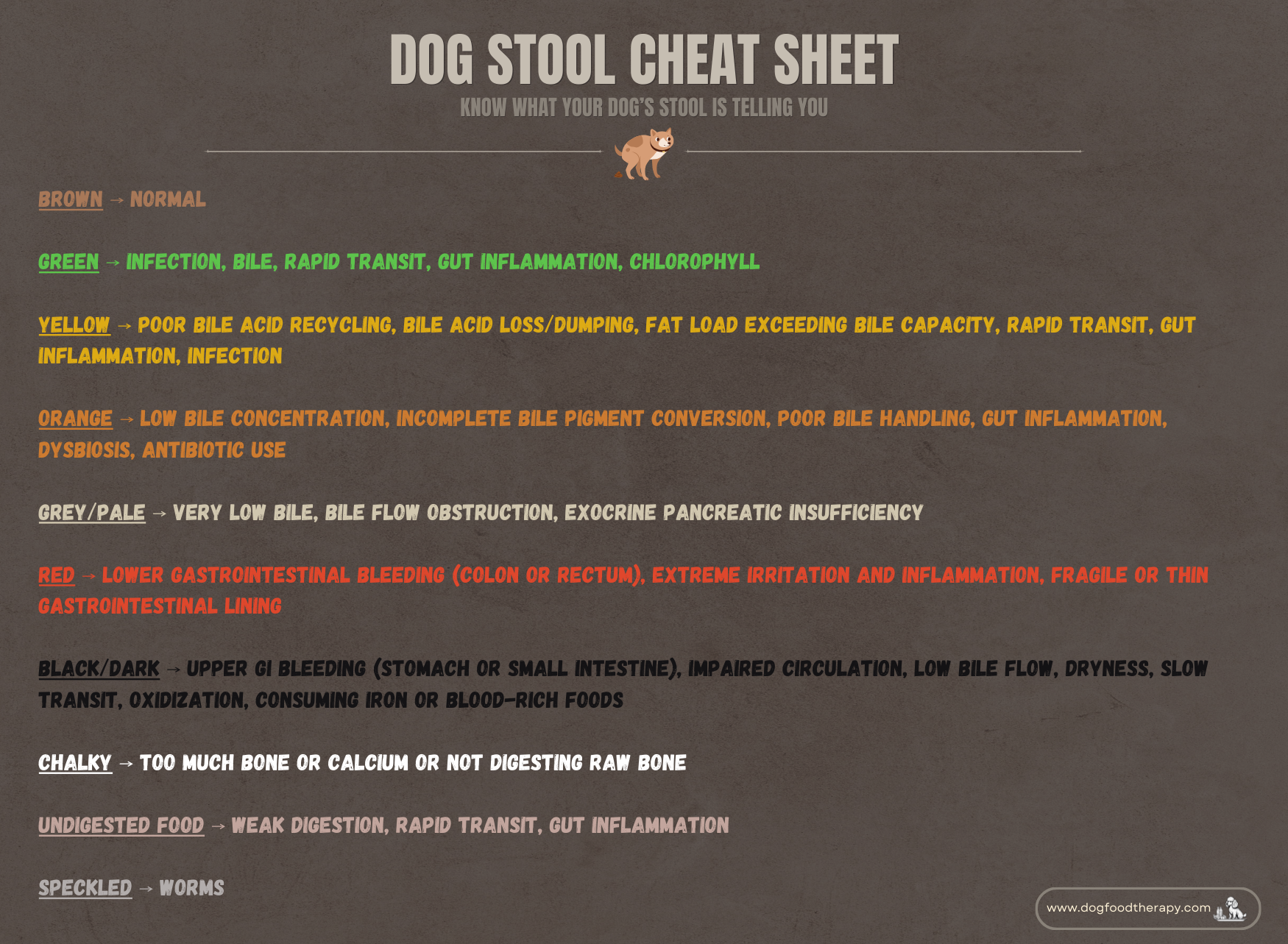
Stools that are urgent, watery, mucusy, bloody or are accompanied by vomiting or lethargy warrant a trip to the vet. Puppies or senior dogs experiencing chronic or severe stool issues also need to be seen by a vet. Comprehensive stools tests and bloodwork may be necessary to rule out parasites and diseases that may be contributing to any stool issues.
Is your dog’s diet supporting them in the ways they need it to and in ways they can tolerate? Look at the macronutrients of your dog’s diet. Do the amounts of protein, fat and carbs agree with their system? Are the essential vitamins, minerals, fats, and amino acids present? Are they balanced? Are they exceeding any safe upper limits? Consider how your dog’s food is being prepared. If these aren’t things you can figure out yourself then find someone who can help you.
From a Traditional Chinese Medicine perspective, every dog has what is referred to as a “constitution”. This helps identify your dog’s tendencies. For example, the dog that has a tendency to run warm and is being fed a warming protein like lamb, may develop dry stools and constipation. In TCM, this dog has a Yin Deficiency or a tendency towards being dry. This dog would do better on a cooler and hydrating protein like pork.
There are many different patterns that lead to stool issues and it is impossible for me to list and explain them all. Many of them can be interconnected as well. I think it would be quite overwhelming and confusing to read, but some of the more common imbalances include:
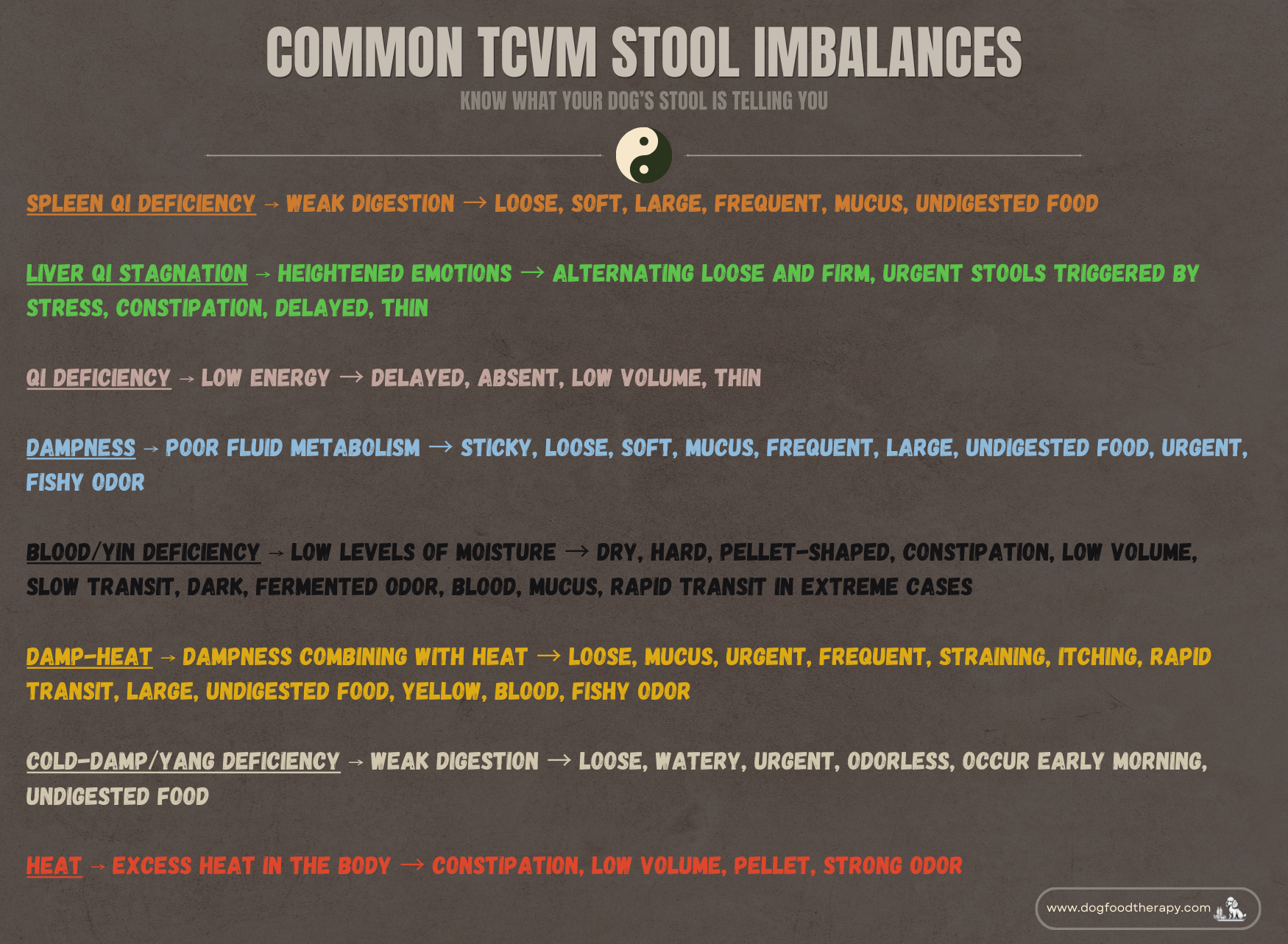
Once you have identified the root cause of your dog’s stool irregularities, you can utilize TCVM food and herbal therapy to build a diet and protocol that supports their tendencies and balances their system.
If you are struggling to pinpoint where the breakdown is occurring for your dog or perhaps you know what’s wrong but you’re unsure how to support them, then it’s time to reach out for help.
Find someone who is knowledgeable about dog physiology, nutrition and TCM who can help you identify where the breakdown is occurring, identify your dog’s constitution and the patterns involved in their stool issues.
Work one on one with me by booking a consultation to discuss your dog’s history, labwork, patterns, constitution and assess all of their symptoms to build a diet and protocol that addresses the root cause of their stool issues.
If you’d like to work on your own, you can flip through other articles I have on my website or purchase any of my self-help guides.
If you’ve found yourself at the bottom of this article it shows your willingness to learn and dig deeper is profound. You are your dog’s biggest advocate and have the opportunity, ability and power to guide them to living a happy and healthy life one poop at a time ;)
Looking for advice and help with your dog's diet and nutritional needs?
Book a one on one call with me where we'll go through your dog's history, habits and any current health concerns. You'll receive tailored recipes and food/herbal therapy guidance on what will best meet their needs. I am also available to chat if you have questions along the way!